Back

Shell and tube heat exchangers

Shell and tube heat exchangers are vital components in industrial processes, providing efficient heat transfer between fluids. Over time, the tubes can accumulate fouling from scale, corrosion, and other contaminants, reducing thermal efficiency, increasing energy use, and straining system performance. Regular cleaning and maintenance are essential to keep these systems operating at peak efficiency.

Fouling issues in heat exchanger tubes

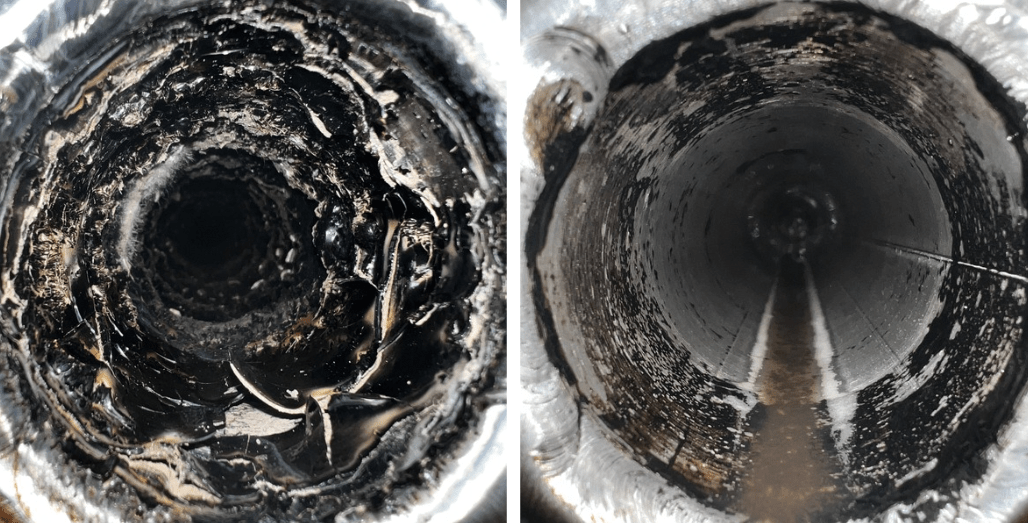
Shell-and-tube heat exchangers are used across a wide range of industrial applications. In some systems, they operate in combination with open-loop cooling towers for cooling purposes, while in others they are used to heat or cool specific products within industrial or chemical processes. Over time, deposits will inevitably accumulate on the inner surfaces of the heat exchanger tubes. The type and severity of these deposits can vary significantly depending on the medium flowing through the tubes. For this reason, selecting the right cleaning method and equipment is crucial. The goal is always to remove as much fouling as possible while maintaining a strong focus on safety, efficiency, and cost-effectiveness.

Commonly found deposit types in shell-and-tube heat exchangers are:

  • Silt
  • Mud
  • Biological growth (biofilm)
  • Rust (corrosion)
  • Scaling (calcium carbonate)
  • Residual product (may vary)

Effects of fouling in tubes

When heat exchanger tubes become fouled, the heat transfer efficiency of the system is significantly reduced. Below, you can find some of the effects of fouling in a heat exchanger.

  • Reduced heat transfer rate: Fouling acts as an insulating layer on the heat exchange surface, which impedes the transfer of heat from the hot fluid to the cooling water. This reduces the overall heat transfer rate, as the fouling material (such as scale, dirt, or biological growth) increases the thermal resistance between the fluids.
  • Increased energy consumption: Because the heat transfer rate decreases, the heat exchanger may need to work harder to achieve the same cooling effect. This typically results in an increase in energy consumption, as the compressor has to operate longer or at higher power.
  • Shorter equipment lifespan: Continued fouling can cause wear and tear on equipment due to higher operational stresses, both from increased energy consumption and from the constant need to pump water against higher pressure drops. This can lead to more frequent maintenance, repairs, and ultimately a shorter lifespan for the heat exchanger tubes and other components.
  • Corrosion and damage: Certain types of fouling, especially biological fouling or the buildup of scale, can cause local corrosion in the heat exchanger tubes. Over time, this corrosion can weaken the tubes, potentially leading to leaks or ruptures.

Improve shell and tube heat exchanger efficiency

Cleaning heat exchanger tubes is a crucial activity to maintain a highly efficient system. Goodway Benelux offers four (4) types of cleaning solutions for removing fouling with heat exchanger tubes. Based on the application, type of deposit and accessability one of the three systems might be the best solution for the application.

  • Mechanical cleaning with rotating brushes: Perfect for removing commonly found soft to medium hard deposits within heat exchanger tubes such as: silt, mud, algae, biological growth, light rust and scaling.
  • Chemical cleaning-in-place: Ideal for removing rust and hard scaling deposits inside tubes. A descaler is circulated through the tubes for a predetermined period, removing the deposits.
  • Projectile cleaning: Used for heat exchangers with a large amount of tubes to be cleaned, often >1000 tubes. This method is fast and effective at removing softer deposits such as: silt, mud, algae and biological growth. But sometimes also possible to remove harder fouling like scaling.
  • Heat exchanger tube drilling: Ideal for removing hard deposits and clearing blockages in straight, small diameter heat exchanger tubes.

Scroll up to find more information on all solutions.
Interested in what Goodway Benelux offers for:

Shell and tube heat exchangers

From pre-sales inquiries to technical support, Goodway Benelux is available to assist customers at every stage. The company also provides on-site support, training, and product demonstrations. Their dedicated sales representatives and project engineers are ready to answer questions and provide guidance throughout the entire process.


Wesley is here to help.

Technical project engineer

info@goodwaybenelux.com+31 (0)183 216 170