Evaporator tube cleaning
Tube cleaning systems to remove various deposits from evaporator tubes (falling film evaporators), commonly found in the dairy industry.
Tubular evaporators are essential in the dairy industry for concentrating milk and whey by removing water through controlled heating. During regular operation, these systems will experience fouling from milk solids, proteins, and minerals that deposit on heat transfer surfaces, especially inside the tubes. This buildup will reduce thermal efficiency, increase energy consumption, and risk compromising product quality. Routine cleaning and maintenance are vital to ensure hygienic conditions, consistent product output, and long-term operational efficiency.
Tubular evaporators are commonly used in the dairy industry for various production processes. During operation, dairy products flow through the tubes, and residues can adhere to the inner tube walls. Over time, these deposits accumulate and form a layer that significantly reduces the system’s efficiency. Additionally, this fouling layer can pose a hygienic risk, as it may mix with fresh product or contaminate other products passing through the system. In summary:
Deposit buildup within evaporator tubes can vary significantly, depending on the process, product(s), and other operational variables. Over the years, Goodway Benelux has supplied equipment to a wide range of dairy companies and found that each process generates its own unique type of deposit.
In general, most deposits tend to be quite hard. When dairy products are heated and layer upon layer accumulates, the resulting buildup can become so solid that it resembles cement. Once deposits reach this level of hardness, removal becomes extremely challenging. Only Goodway®’s most robust scraping tools are capable of breaking through such blockages – though even then, the process can be time-consuming or not successful at all.
Based on the experience of Goodway Benelux, three main types of deposits have been identified:
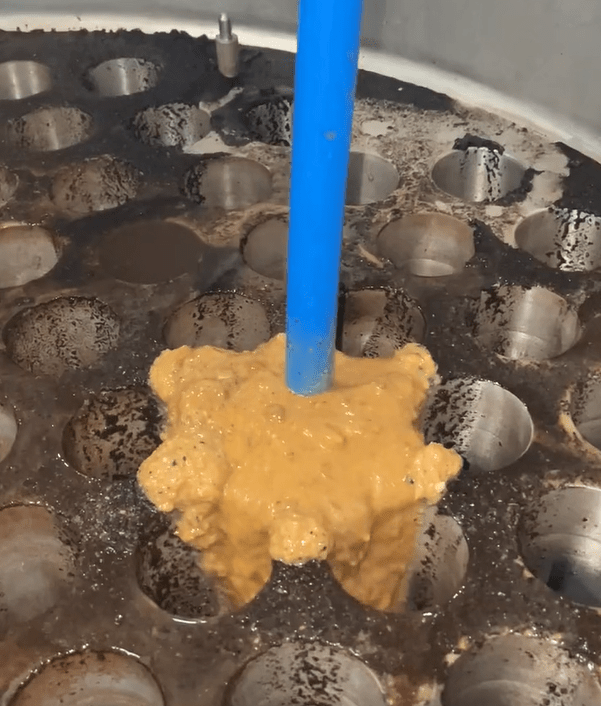
Maintaining clean evaporator tubes is essential for ensuring an efficient and uninterrupted production process. Using Goodway® equipment for preventive cleaning helps keep the tubes clean and free from obstructions. When preventive maintenance is not feasible, the same equipment can also be used for reactive cleaning. In both scenarios, the core system remains the same – only the tools and brushes vary, depending on the hardness and type of deposits.

From pre-sales inquiries to technical support, Goodway Benelux is available to assist customers at every stage. The company also provides on-site support, training, and product demonstrations. Their dedicated sales representatives and project engineers are ready to answer questions and provide guidance throughout the entire process.