Evaporative condenser cleaning
Specialized descalers for evaporative condensers, enabling effective clean-in-place (CIP) treatment of the outer side of tubes to remove scale (calcium carbonate) and biological deposits.
Evaporative condensers are vital components in HVAC/R systems, playing a key role in heat rejection through the evaporation of water. Due to their continuous exposure to air, water, and environmental contaminants, these systems are particularly prone to fouling and scale buildup over time. Without regular cleaning and maintenance, their efficiency will drop significantly. Routine upkeep is essential to maintain optimal performance, improve energy efficiency, and extend equipment lifespan.
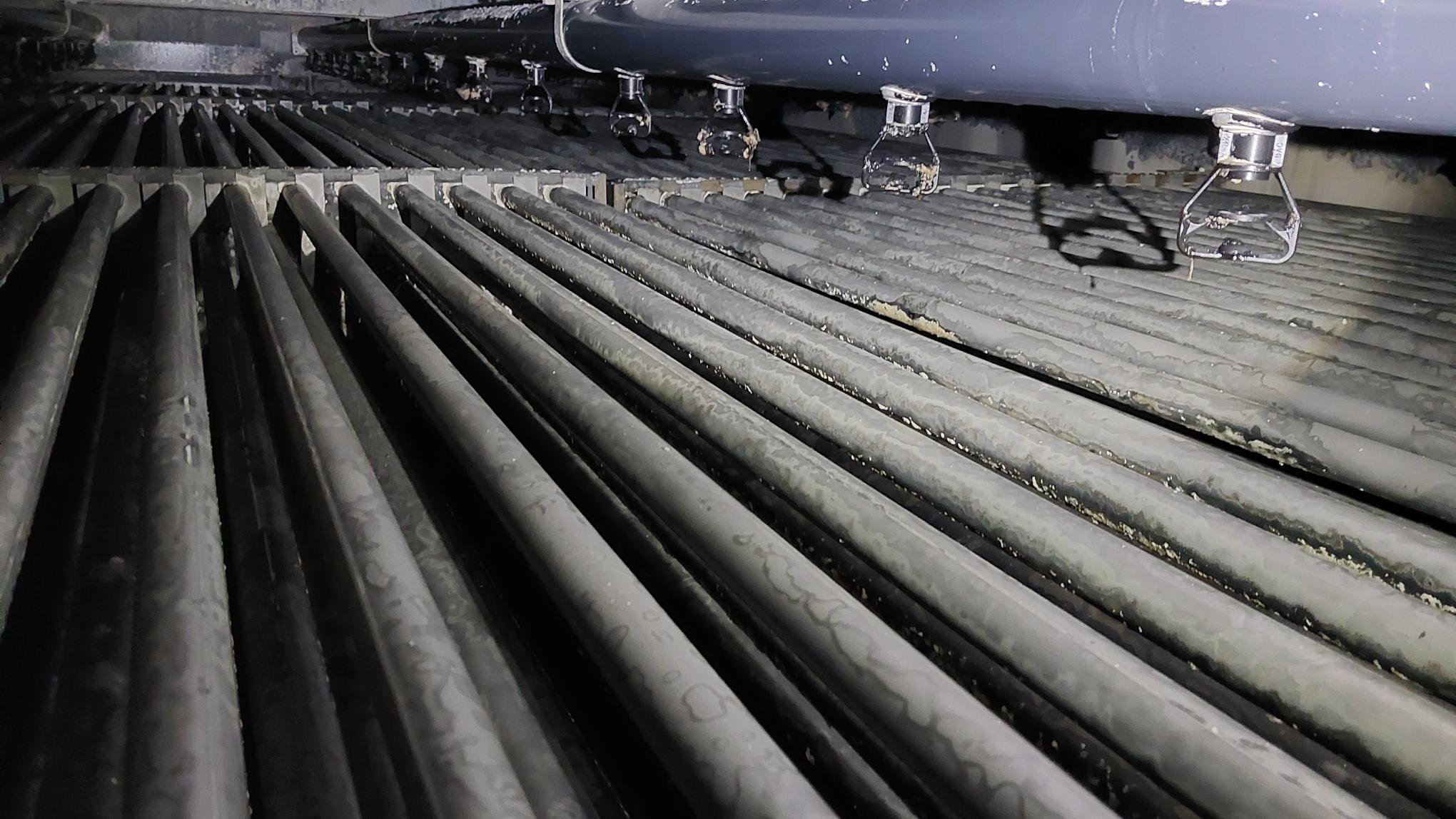
Evaporative condensers are equipped with a tube bundle which holds refrigerants – such as ammonia – on the inner side. During operation, water is used to cool down the media inside the tubes. When the water treatment is not working correctly, fouling will become present, usually in the form of scaling (calcium carbonate). The scale accumulation will be most present on the tube bundle since this is where the heat transfer is taking place. Keeping the tubes clean is crucial to maintain an efficiently operating system. In short:
Note: Even with proper water treatment, fouling may still occur, though it will develop more slowly compared to untreated systems.
When evaporative condenser tubes become fouled, the heat transfer efficiency of the system is significantly reduced. Below, you can find some of the effects of fouling in a heat exchanger.
Reduced heat transfer efficiency: Fouling reduces the heat transfer rate between the refrigerant and the cooling water. As the fouling layer builds up, it acts as an insulating barrier, making it harder for heat to transfer effectively from the refrigerant to the cooling water. This leads to a decrease in the overall efficiency of the condenser.
Increased energy consumption: As heat transfer efficiency declines due to fouling, the system must work harder to achieve the same level of cooling. This can lead to higher energy consumption, as the compressor needs to operate at higher pressures and the pump must circulate more water to maintain the cooling performance.
Increased operating temperatures: Fouling can cause the evaporative condenser to operate at higher temperatures, as the heat exchange becomes less efficient. Higher operating temperatures can reduce the overall efficiency of the refrigeration cycle and potentially affect the performance of other components in the system.
Reduced capacity: As fouling builds up over time, the evaporative condenser’s cooling capacity decreases. The system may not be able to condense the refrigerant to the desired state, which can lead to reduced capacity in the refrigeration or air conditioning system, affecting its ability to maintain required temperatures.
Increased maintenance and operational costs: Fouling leads to more frequent maintenance needs, such as cleaning or replacing fouled components, like heat exchanger tubes or the entire condenser. This increases operational costs and may require shutdowns for cleaning and repairs, affecting system availability.
Potential for corrosion: Fouling often involves the accumulation of minerals (like calcium and magnesium) or biological growth, which can create localized corrosive environments. For example, scale buildup can trap moisture and increase the risk of corrosion on metal surfaces, further damaging the condenser and reducing its lifespan.
Water quality degradation: In evaporative condensers, poor water quality due to fouling can result in more scaling and biological growth, leading to more serious issues like biofilm buildup. These biological films can harbor bacteria, increase the risk of Legionella outbreaks, and further degrade water quality.
Reduced system lifespan: Due to the combined effects of reduced heat transfer, higher temperatures, corrosion, and increased maintenance, fouling can shorten the overall lifespan of an evaporative condenser, leading to costly repairs or replacements.
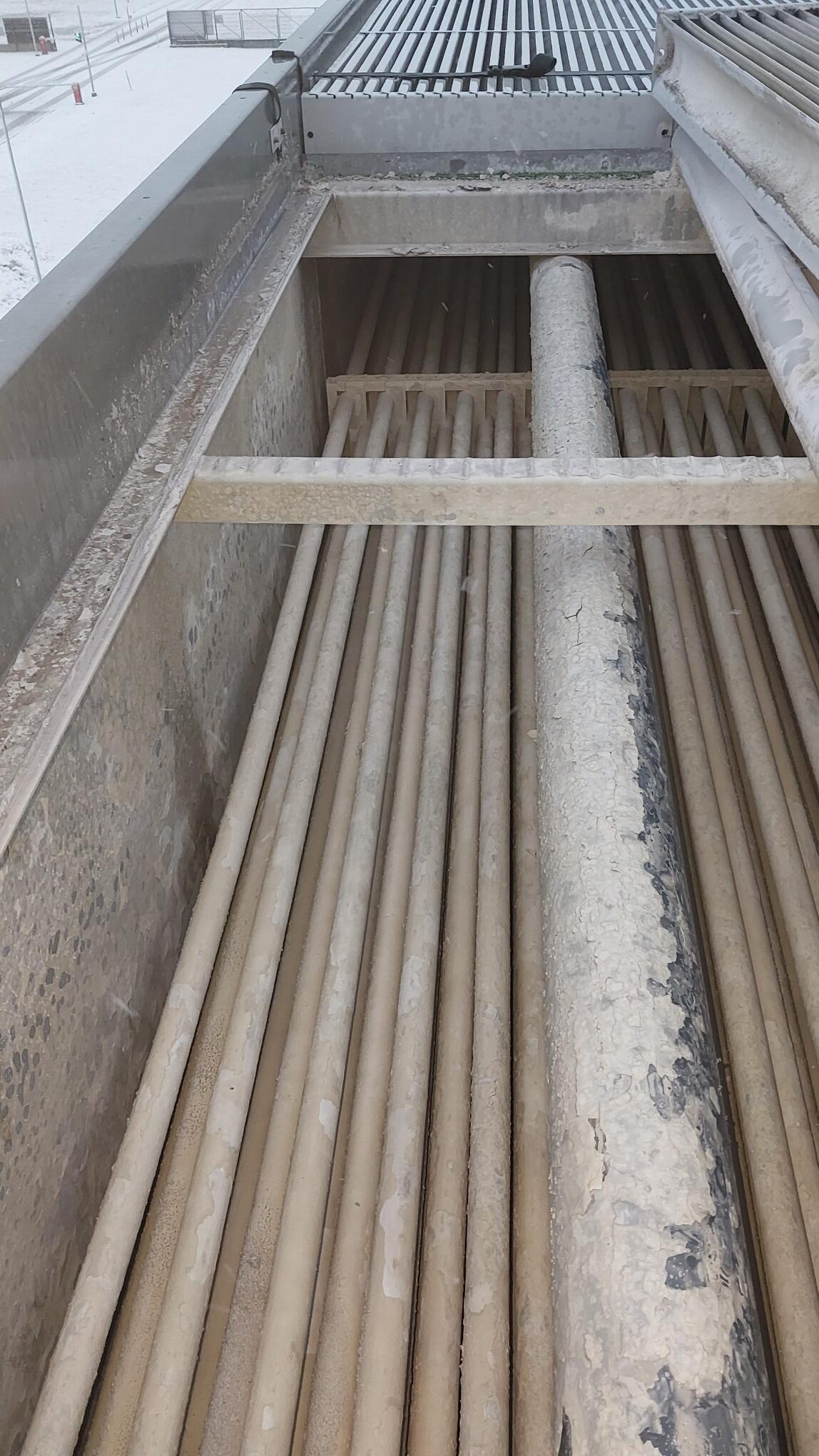
Keeping evaporative condensers clean is crucial to maintain a highly efficient system. Goodway Benelux offers a special descaling product, called ScaleBreak-MP. Which can be used by means of circulation, also known as cleaning-in-place. This product removes waterformed deposits such as scaling (calcium carbonate), rust and other biological deposits.
From pre-sales inquiries to technical support, Goodway Benelux is available to assist customers at every stage. The company also provides on-site support, training, and product demonstrations. Their dedicated sales representatives and project engineers are ready to answer questions and provide guidance throughout the entire process.